Apollo 11 launches: the million-visitor weekend on Cocoa Beach
On July 16, 1969, roughly a million spectators packed the Brevard coast for the Apollo 11 launch. Motels were selling driveway parking. Hotels were renting cots. Cocoa Beach ran out of food. The biggest weekend in the town's history.
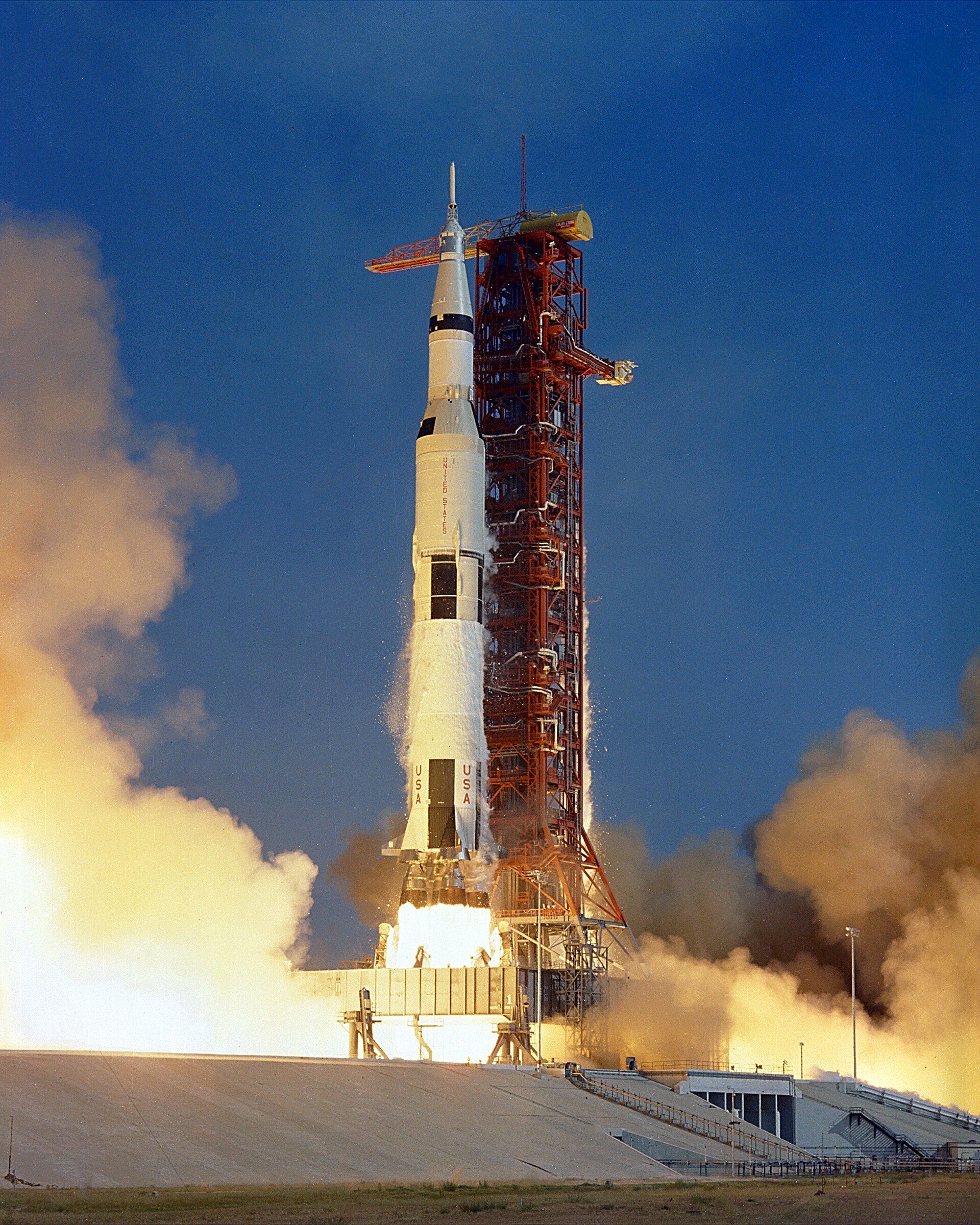
At 9:32 a.m. EDT on Wednesday, July 16, 1969, Apollo 11 lifted off from Launch Complex 39A at the Kennedy Space Center. The crowd on the Brevard coast, Cocoa Beach, Cape Canaveral, Titusville, Merritt Island, Melbourne, has been variously estimated at one million spectators (NASA’s contemporary estimate), with peer-reviewed reconstructions running from 800,000 to 1.2 million. Whatever the exact number, it was, by every measure, the largest single-day visitor event in Brevard County history. The previous record holder, Apollo 10 in May 1969, had drawn an estimated 350,000. Apollo 11 doubled or tripled that.
Cocoa Beach was the visible center of the spectator chaos. Its population was about 10,000 year-round in 1969; on July 15 and 16, it hosted approximately a hundred times its resident population in the streets, on the beach, on the pier, in the motels, in the parking lots, and on every flat surface with a north-facing line of sight to Pad 39A.
This piece reconstructs what that weekend was actually like on the ground in Cocoa Beach, from contemporary Florida Today reporting, NASA visitor-management records, and the few oral histories of residents and visitors who were there.
The arrival pattern
Visitors started arriving in Cocoa Beach on Sunday, July 13, three days before the launch. By Monday afternoon every motel from the Holiday Inn at the south end to the Cape Colony Inn at the north end of the strip was at capacity. Backup motels in Cape Canaveral and Merritt Island filled by Tuesday morning. Cocoa, Rockledge, Eau Gallie, and Melbourne motels filled by Tuesday afternoon. Daytona Beach, an hour to the north, started taking Apollo overflow on Tuesday evening.
By Wednesday morning the launch-day overflow was sleeping in cars, on motel lobby floors (some establishments charged $5 to $10 per person for floor space), in beach blankets on the sand, on the Cocoa Beach Pier deck, and in the parking lots of every business open for business. Florida Today reported motels charging $10 to $50 per night for driveway parking spaces with no shelter, eight to forty times the going rate for a regular motel room.
The Banana River causeway (State Road 520) carried bumper-to-bumper traffic in both directions from Monday afternoon through Wednesday evening. The state highway patrol routed inbound traffic onto secondary roads to relieve the spine. Cocoa Beach’s two-lane A1A became a long parking lot for most of Tuesday and Wednesday.
Where they watched
The Apollo 11 launch was, from a viewing standpoint, a straight-line problem. Pad 39A sits roughly 15 miles north of central Cocoa Beach as the crow flies. Anywhere on the Cocoa Beach Atlantic side with an unobstructed northward sight line could see the launch, with the actual ignition column visible above the dunes and the sound arriving about 75 seconds later (sound speed in 70°F air, 15 miles, gives roughly 75 seconds). The closer you got to the Cape, the louder and faster the rumble; from Cocoa Beach Pier the launch was audibly impressive but not overwhelming. From Titusville (across the Banana River from the launch site) the sound was physically painful for the front-row spectators.
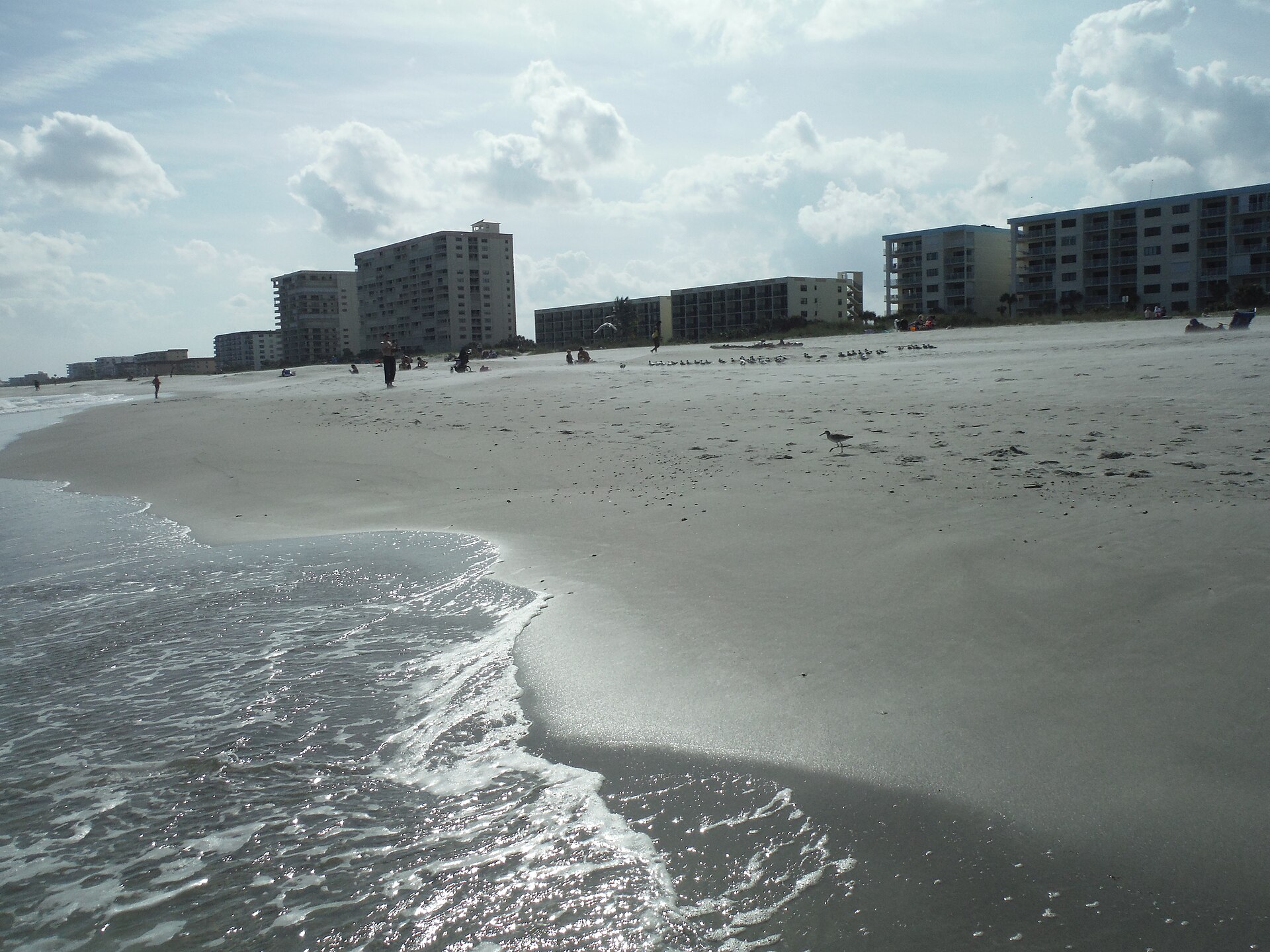
The Cocoa Beach Pier was packed solid. Contemporary photos show every inch of the walkway covered with people, some sitting on the railing, some climbing on bait-shop roofs. The beach itself, from Lori Wilson Park north to Cape Canaveral, was a continuous line of blankets and umbrellas. Lots and rooftops with elevation got the highest premiums; the city issued multiple ordinances allowing temporary rooftop access for the day.
NASA estimated, in its post-mission visitor analysis, that approximately 200,000 spectators watched from official visitor sites near the Cape itself, with the remaining 600,000 to 800,000 distributed across the Brevard coast in unofficial viewing positions. Cocoa Beach absorbed roughly 100,000 to 200,000 of those, depending on which definition you use.
What sold out
By Tuesday evening Cocoa Beach restaurants were running out of food. Florida Today and contemporary local oral histories describe Bernard’s Surf, Ramon’s, the Mai Tiki Bar, and other major Cocoa Beach restaurants taking emergency deliveries from mainland Cocoa suppliers and still running short. Several restaurants closed early Wednesday morning to restock before the post-launch surge. Coffee, beer, ice, and bread all sold out in Cocoa Beach proper by midday Tuesday; supplies came in from Brevard mainland deliveries through the night.
Gas stations sold out of gasoline. The Texaco at the south end of Cocoa Beach was, by the Florida Today report, the last station with fuel on the barrier strip; by Wednesday afternoon (post-launch, when visitors started leaving) the lines stretched a mile. Several stations rationed gasoline to ten gallons per car.
Ice was the most missed commodity. Cocoa Beach in July is hot, daily highs in the upper 80s, with the high humidity that makes Florida summer rough. Ice for coolers, drinks, and air conditioning sold out across the barrier strip on Tuesday. By Wednesday morning ice was being trucked in from as far away as Daytona Beach and sold at $5 a bag (in 1969 dollars, the equivalent of about $42 in 2026), about five times the normal price.
The launch itself
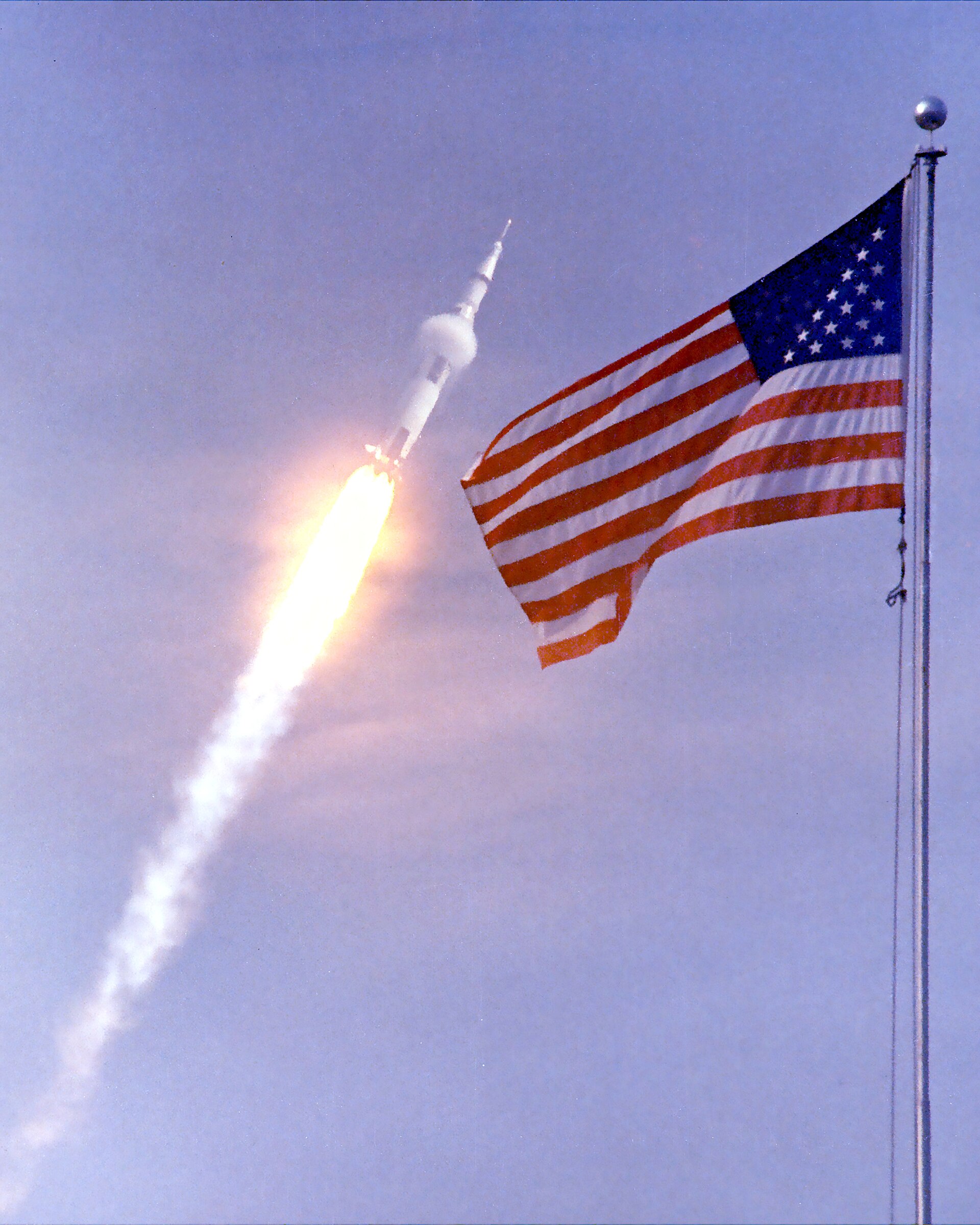
At 9:32 a.m. EDT the Saturn V ignited. From central Cocoa Beach the visual was a brilliant orange-white column rising above the dunes to the north, climbing for what felt like minutes but was actually about three minutes of visible thrust before the rocket cleared the visual horizon. The audio arrived about 75 seconds in: a sustained low rumble that contemporary spectators described as “feeling the ground move” and “hearing through your chest, not your ears.”
Then it was gone. The Apollo 11 stack was on its way to the Moon. The Cocoa Beach crowd, which had spent up to four days getting to this exact moment, had received their three minutes and was now collectively trying to leave.
The departure took longer than the arrival. By Wednesday afternoon A1A was effectively immobile in both directions. Some visitors gave up, returned to their motel rooms (those who still had rooms), and waited out the rush. Others slept in cars on side streets. The departure traffic took until Friday to fully clear the barrier strip. The state highway patrol’s after-action report on Apollo 11 traffic management is the document still referenced for major Florida space-launch crowd planning.
The aftermath
Cocoa Beach made money on Apollo 11. The hotels and motels grossed more in the four-day window than in any previous quarter. Restaurants did the same. Ron Jon Surf Shop sold every surf-related souvenir on the floor. The City of Cocoa Beach’s tourist-tax revenue for July 1969 was the highest single-month figure in the city’s history to that point.
The town also exhausted itself. By the end of July, Cocoa Beach motel staff, restaurant staff, and police were openly looking forward to the August lull. Apollo 12 in November 1969 drew a smaller crowd. Apollo had become routine to the casual public; only Apollo 11 had the moon-landing premiere status. Subsequent Apollos drew progressively smaller spectator surges through 1972.
The Apollo 11 weekend remains, in 2026, the unbeaten single-event spectator record for Brevard County. Shuttle launches were never permitted public viewing at the scale of Apollo 11. SpaceX launches in the 2020s have drawn substantial crowds, but the modern Cocoa Beach has more hotel capacity, better traffic management, and a more dispersed visitor pattern. Nothing has matched July 16, 1969: a million people, a fifteen-mile sight line, a barrier-island town in over its head, and three minutes of fire that ended an era.
Sources
- NASA, Apollo 11 mission report, nasa.gov/history/apollo-11-50th-anniversary
- Florida Today archives, July 12–18, 1969 (Brevard County Library microfilm)
- Florida Highway Patrol after-action report, Apollo 11 traffic management (1969)
- Brevard County tourism tax records, July 1969 (Brevard County Tax Collector)
- U.S. Census Bureau, 1970 Brevard County demographic data
Further Reading
As an Amazon Associate we earn from qualifying purchases.