The 1980s Cocoa Beach motel era and the post-Apollo decline
The mid-century motel boom built by Apollo crested in 1969 and slowly fell apart through the 1980s. What got demolished, what survived, and how the modern condo era erased most of the iconic Cocoa Beach motel architecture.
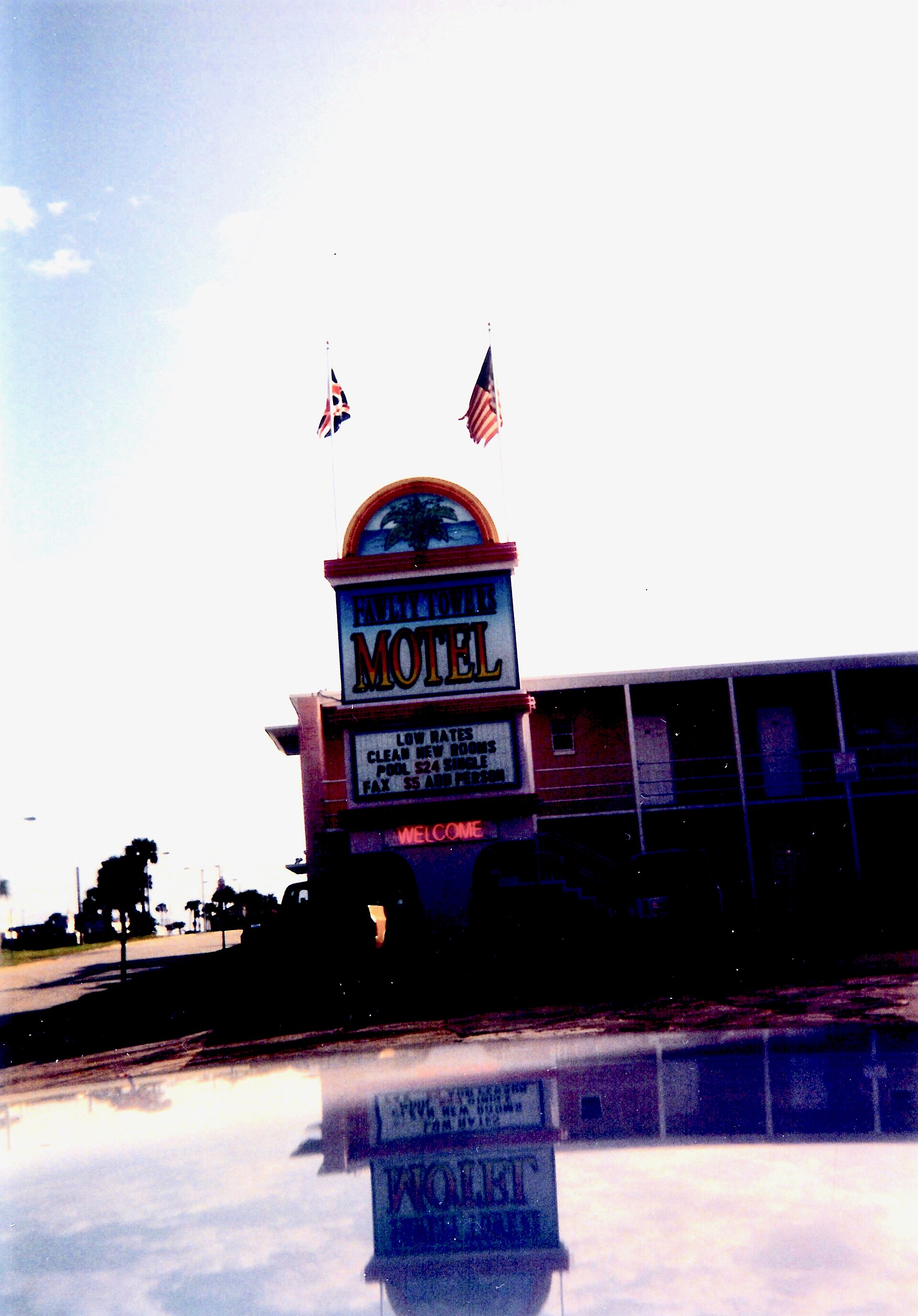
The Cocoa Beach motel era ran from roughly 1958 to 2005, with its boom decade in the 1960s, its peak occupancy in July 1969, and its long decline through the 1980s and 1990s into the condo era. By the time Phillip Pessar photographed the surviving Cocoa Beach motels in December 1991 (the Florida Memory archive’s most-comprehensive single record of the period), at least a third of the buildings he photographed had been demolished within fifteen years, and the boom-era roster, Polaris, Vanguard, Cape Colony Inn, the original Holiday Inn, Sea Missile, was being progressively erased.
The 1980s is the inflection decade. Apollo had ended in 1972. The Shuttle program ramped up between 1976 and 1981. Cocoa Beach’s contractor and tourist population stabilized at a smaller, different mix. The motels that had been built for Apollo crowds were now competing for a shrinking pie of vacationers, business travelers, and beach renters. Many lost.
The geometry of the lost buildings
Cocoa Beach mid-century motel architecture was, regionally, distinctive. The standard shape was:
- One or two stories, cinder-block construction
- Exterior-corridor floor plan (rooms accessed from a covered walkway, no interior hallway)
- Jalousie windows (horizontal slatted glass operated by a crank) on most units
- Kidney-shaped or rectangular swimming pool, often facing the parking lot
- Cocktail-glass or wave-themed neon signage
- Astronaut-and-rocket themed names (Polaris, Sea Missile, Vanguard, Sky-Lab, Surf, Astro)
- 30 to 80 rooms per property
- Located on A1A or one of the side streets immediately adjacent
Material specs were modest. The cinder-block walls and flat or low-pitched roofs worked tolerably in Florida summer (with air conditioning, which arrived as standard equipment in the late 1960s), but the buildings weren’t designed for forty-year lifespans. By the 1980s the original concrete-pad foundations were cracking, the jalousie windows were leaking, the roofs were aging out of warranty, and the pools were old enough to need significant capital reinvestment.
That capital was hard to justify. Most of these motels were owner-operated or owned by small corporate entities; the original 1960s investors were aging out, in some cases dying, in some cases simply moving on. A 50-room Cocoa Beach motel that needed $500,000 in 1985 to update its mechanicals and finishes had a hard case for that investment if occupancy was running 60% and average daily rates were $30.
What happened next
The mid-1980s through early 2000s saw a wave of Cocoa Beach motel demolitions and conversions. Three primary patterns:
Demolition for condominium redevelopment. The biggest driver. A 50-room oceanfront motel sitting on three-quarters of an acre of beachfront could be sold to a condo developer, demolished, and replaced with a 50-unit multi-story condo building that sold for ten to twenty times the land’s previous valuation. Florida property law and Cocoa Beach zoning generally permitted the upzoning. Several iconic Cocoa Beach motel sites went this route between 1985 and 2010, including the Holiday Inn site (now a Hilton or related operation, the specific brand having changed several times) and several A1A properties between Cocoa Beach Pier and the south boundary.
Conversion to weekly/monthly rental. Some motels that couldn’t justify the capital to remain competitive as tourist properties pivoted to longer-stay rentals, often catering to traveling defense contractors, Patrick AFB visiting personnel, and budget vacationers. This was the slow-decline path. Several Cocoa Beach motels still operate this way in 2026, recognizably 1960s buildings, with worn paint, working air conditioning, and rental rates in the $300 to $600 per week range.
Outright closure and abandonment. A smaller number of properties closed without redevelopment, sitting boarded for years before eventual demolition. Hurricane damage (Frances and Jeanne in 2004, Matthew in 2016, Irma in 2017) accelerated some of these.
The Phillip Pessar 1991 archive
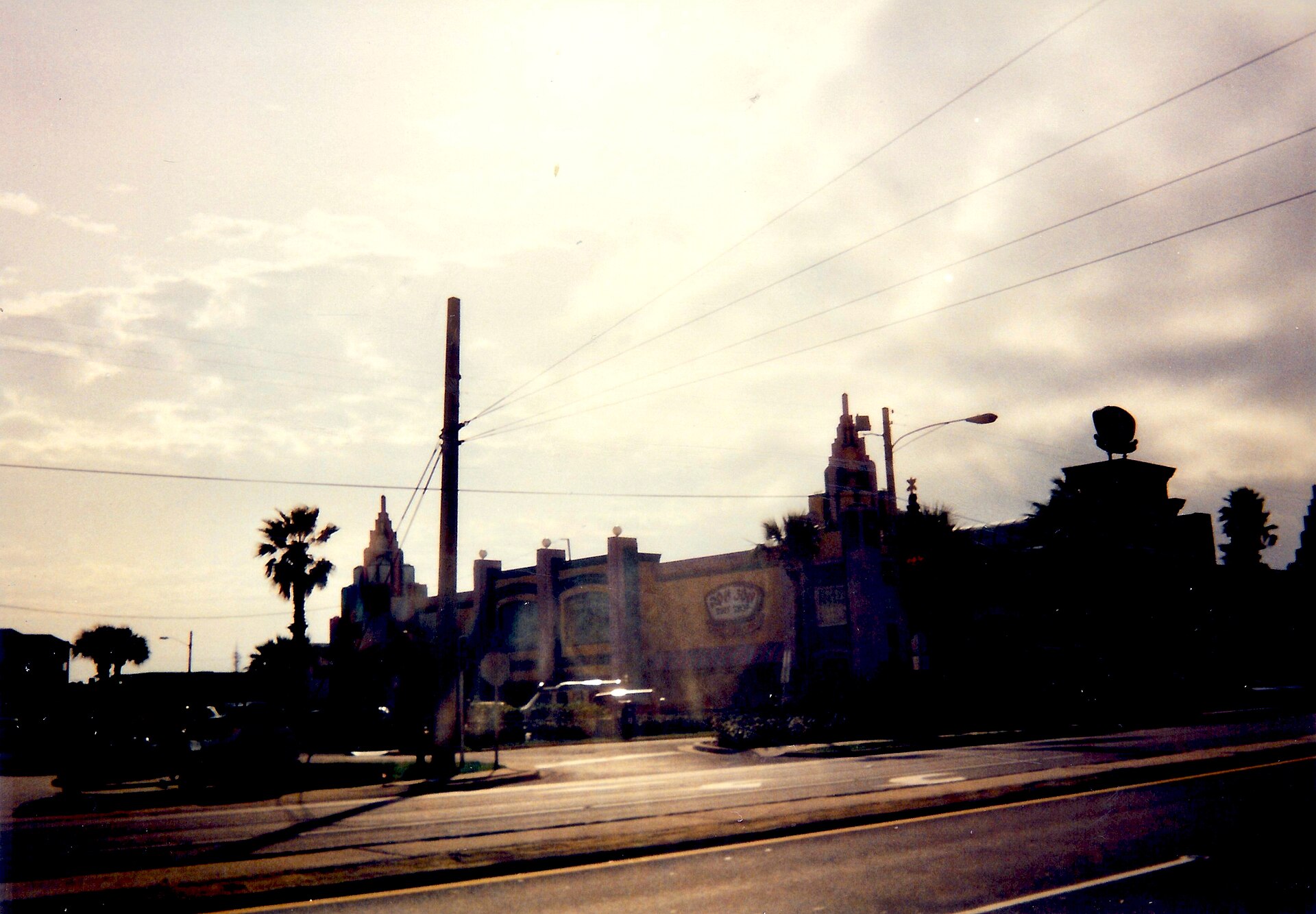
The single most useful documentary source for what 1980s Cocoa Beach looked like is the Phillip Pessar photographic series, archived through Wikimedia Commons under the Florida Memory umbrella. Pessar, a Florida photographer, made systematic photographic surveys of Florida commercial architecture in the late 20th century, and his December 1991 Cocoa Beach series captures dozens of motels, restaurants, and storefronts on their way out.
The series includes:
- The Fawlty Towers Motel (still operating in 2026 in some form)
- Ron Jon Surf Shop pre-major-expansion
- Various A1A motel exteriors
- Restaurant signage, including some operations now closed (Mai Tiki Bar’s earlier iteration, others)
- Cocoa Beach Pier pre-1996 fire and pre-Westgate ownership
The images are now public under CC BY-SA 4.0, which is the reason this site can use them. Pessar’s documentation, more than any other single archive, captures the visual texture of Cocoa Beach immediately before the major redevelopment cycle of the 1990s and 2000s.

What remains in 2026
The mid-century Cocoa Beach motel landscape is mostly gone, but pieces remain. The Fawlty Towers Motel still operates. A handful of smaller A1A motels survive in recognizable mid-century form, often with paint, signage, and pool updates but the original building bones intact. The Cocoa Beach Surf Inn, the Cape Colony Motel (current operation; not the original Cape Colony Inn the Mercury astronauts used), and several others run as continuous-occupancy properties.
For a visitor in 2026 trying to find authentic mid-century Cocoa Beach, the strategy is: drive A1A from the pier north and south, look for jalousie windows on cinder-block buildings, look for kidney-shaped pools, ignore the brand-new Hampton Inns and Hilton Garden Inns and Marriott Residence Inns. The surviving original motels are still there. They’re not the most comfortable lodging in town, but they’re the closest you can stay to the Apollo era.
The condos that replaced most of the motel stock are higher-quality buildings in absolute terms (better mechanicals, better insulation, better hurricane-rated construction). They’re also generic. From a beach-front condo you cannot tell whether you’re in Cocoa Beach, Vero Beach, Daytona Beach Shores, or Boca Raton. From the courtyard of the old Polaris or Vanguard motel, you knew exactly where you were.
That trade-off, character for comfort, is the story of Cocoa Beach architecture from 1980 onward. The town is more livable now. It’s also less itself.
The census numbers behind the decline
The motel-era trajectory tracks one-to-one with the US Census decennial counts for Cocoa Beach. The city went from 3,475 residents in 1960 to 9,952 by 1970, a 186.4% jump driven almost entirely by the Apollo workforce and the contractor population around Kennedy Space Center (US Census Bureau, decennial counts for Cocoa Beach, Florida). That single decade is the boom that built the motels. The 1970s, with Apollo wound down and Shuttle not yet flying, slowed sharply: the city added fewer than a thousand residents by 1980, ending at 10,926. Growth resumed in the 1980s as Shuttle ramped up, with the population reaching 12,123 by 1990, then peaking at 12,482 in the 2000 count before falling to 11,231 by 2010, a 10.0% decade-over-decade loss.
Brevard County overall ran a different curve: 111,435 residents in 1960, 230,006 by 1970 (a 106.4% increase), 272,959 by 1980, then steady but slower growth to 398,978 by 1990 and 476,320 by 2000 (US Census Bureau, Brevard County decennial counts). The countywide growth absorbed the post-Apollo workforce in inland communities — Titusville, Melbourne, Palm Bay — while the barrier-island municipalities, Cocoa Beach and Cape Canaveral, stagnated or shrank. The motel stock had been built for an oceanfront tourist economy that depended on contractor pass-through and Apollo-era prestige; once that demand evaporated, the buildings sat on land that was worth more cleared than occupied.
Hurricane seasons that accelerated demolition
The 2004 Atlantic hurricane season landed two major storms within three weeks. Hurricane Frances made landfall on September 5, 2004 at the south end of Hutchinson Island as a Category 2 with 105 mph winds, producing severe beach erosion that extended from Vero Beach north to Cocoa Beach (NHC Tropical Cyclone Report, Frances, Beven, National Hurricane Center). Hurricane Jeanne struck the same coast on September 26 as a Category 3 with 120 mph sustained winds, with hurricane-force winds extending from Stuart to Cape Canaveral (NHC Tropical Cyclone Report, Jeanne, Lawrence and Cobb, National Hurricane Center).
The cinder-block, jalousie-windowed, flat-roofed 1960s motels were not built to current Florida Building Code wind-load standards (revised after Hurricane Andrew in 1992 and again post-2004). Several Cocoa Beach properties that took roof or window damage in the 2004 season hit the same calculation their owners had been dodging for two decades: $300,000 to $600,000 in storm repairs on a building already needing $500,000 in deferred capital, sitting on a parcel worth $2-4 million to a condo developer. The math was no longer ambiguous. The 2004 season closed several properties that had hung on through the 1990s redevelopment wave.
Further Reading
Sources
- Florida Memory Project, Phillip Pessar 1991 photographic series, accessible via Wikimedia Commons
- City of Cocoa Beach planning and zoning records, demolition permits 1985–2005
- Florida Today archives, real-estate sections 1985–2010 (Brevard County Library microfilm)
- Florida Trust for Historic Preservation, Cocoa Beach mid-century architecture survey (limited)
- Brevard County Property Appraiser, parcel-history records for redeveloped properties
As an Amazon Associate we earn from qualifying purchases.