The 2017 Hurricane Irma evacuation of Cocoa Beach
Hurricane Irma triggered one of the largest evacuations in Florida history. Brevard County, including Cocoa Beach, was under mandatory evacuation orders for several days in September 2017. A documented account of what happened on the barrier strip.
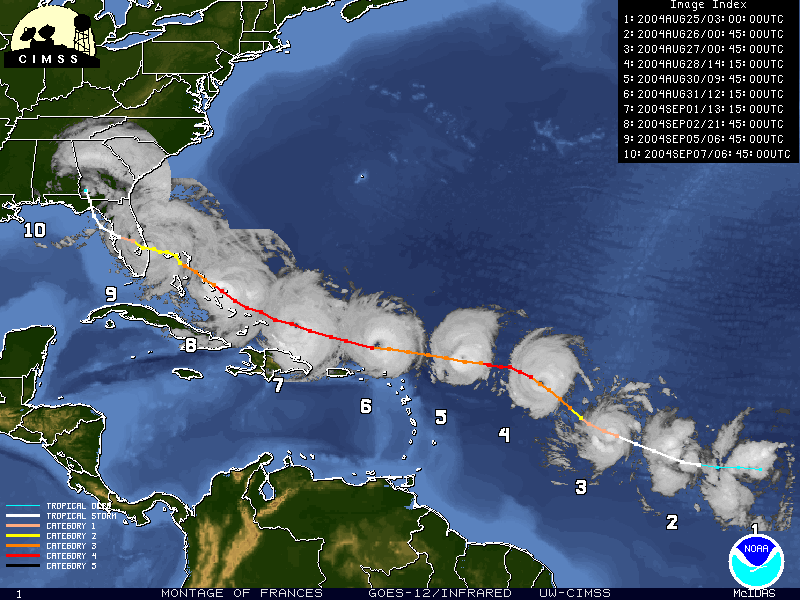
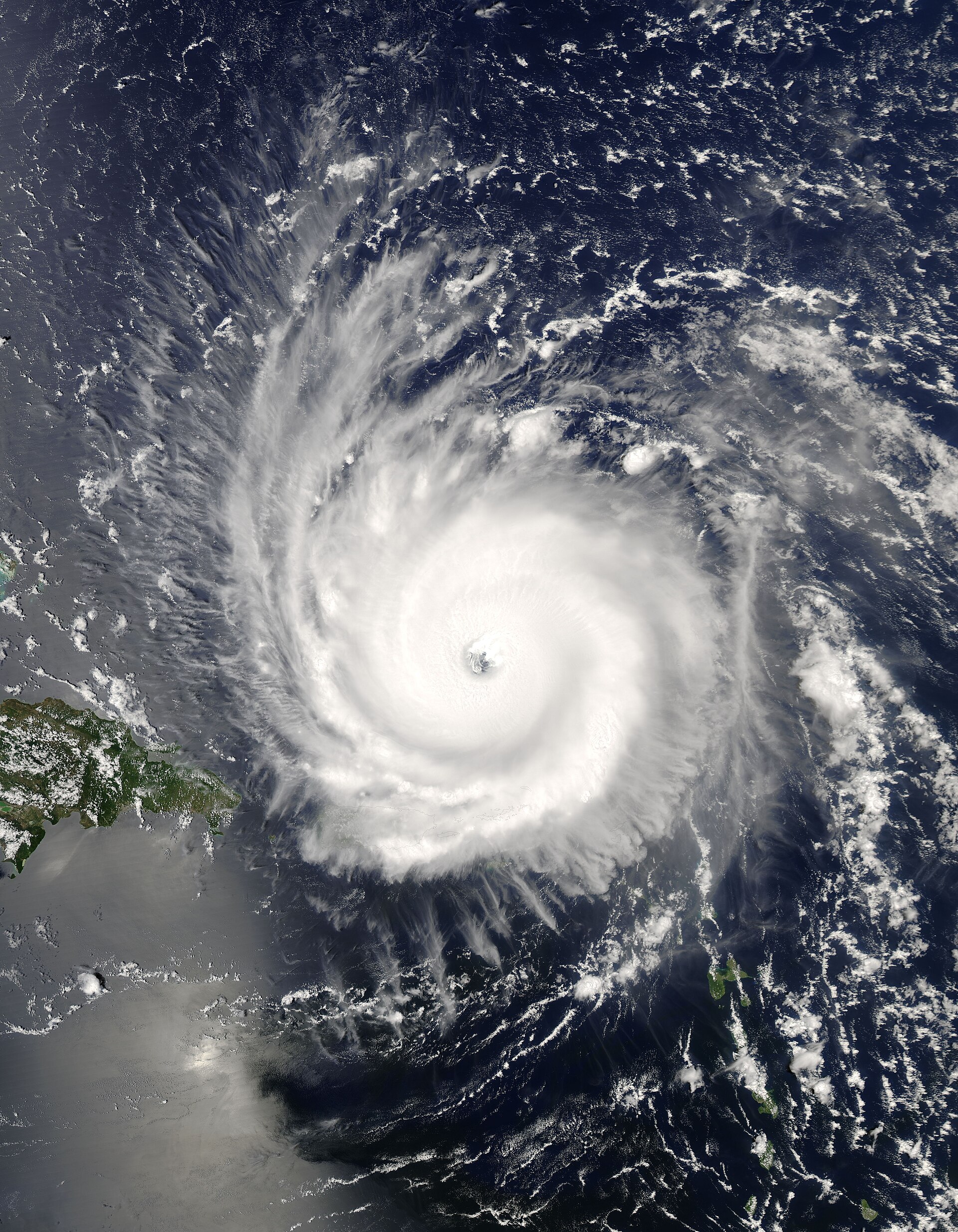
Hurricane Irma made Florida landfall on September 10, 2017, as a Category 4 hurricane on Cudjoe Key in the Florida Keys, then tracked north over the Florida peninsula. By the time the storm’s eye passed nearest to Brevard County (offshore, west, on September 10 to 11), Irma had weakened to a Category 1 to tropical-storm-force system. Brevard County experienced sustained tropical-storm conditions with hurricane-force gusts in extreme exposures, several inches of rain, beach erosion, structural damage to vulnerable properties, and several days of power outages. None of that was the most disruptive part of the storm for Cocoa Beach.
The most disruptive part was the evacuation.
Florida’s response to Irma included the largest single mass-evacuation in state history at that point: approximately 6.8 million Floridians were under evacuation order, including the entirety of Brevard County’s barrier strip and substantial portions of the mainland. Cocoa Beach residents, like every other Brevard barrier-island resident, were subject to a mandatory evacuation order issued by the Brevard County Office of Emergency Management. The order ran through the storm and into post-storm-damage-assessment phase.
This piece documents what that evacuation actually looked like on the ground in Cocoa Beach, from contemporary state and county records, NHC after-action analysis, and Florida Today reporting.
The forecast and the decision
Irma was tracked in the National Hurricane Center’s forecast cone for the Florida peninsula from approximately September 4, 2017 onward. As the storm approached the Caribbean and intensified to Category 5 (peak winds of 180 mph in the central Caribbean), the projected Florida impact track shifted multiple times. By September 6, Brevard County emergency management was preparing evacuation orders. By September 7, the orders were issued.
The decision was preemptive: Irma’s eventual track through Florida was, as of September 7, uncertain. The storm could have made landfall on the southern Atlantic coast (which would have produced major-hurricane impact at Cocoa Beach), the southwestern Gulf coast (which produced major-hurricane impact in southwest Florida), or any of several other paths. The evacuation order applied to all Brevard County areas that would face significant impact in the worst-case scenario.
For Cocoa Beach specifically, the mandatory evacuation covered:
- All barrier-island residents and visitors
- All oceanfront properties south of the Cape Canaveral municipal boundary
- All mobile homes and manufactured housing (regardless of inland location)
- Any structure in a designated storm-surge inundation zone
The order was technically a state-of-emergency / mandatory-evacuation, which under Florida law permits but does not legally compel residents to leave. Residents could remain by signing waivers acknowledging that emergency services would not respond during the worst of the storm. In practice, the vast majority of Cocoa Beach residents who could leave, did leave.
The departure
The Brevard barrier strip emptied between September 7 and September 9. The State Road 520 causeway (the Banana River bridge connecting Cocoa Beach to mainland Cocoa) carried sustained heavy outbound traffic for several days. I-95 northbound and the Florida Turnpike northbound, which carried Brevard evacuation traffic toward Georgia and Tennessee, ran in stop-and-go conditions for periods of 200+ miles.
The Florida Department of Transportation implemented contraflow on I-75 (reversing the inbound lanes to support outbound traffic) for some periods of the evacuation. Contraflow on I-95 was discussed but not implemented for Irma; the state-level decision was that I-95’s outbound capacity was sufficient if contraflow was implemented further upstream on smaller corridors.
Gasoline shortages affected the Brevard barrier strip during the evacuation. Stations along A1A, on the Banana River causeway, and on Brevard County mainland routes ran out of fuel in the days preceding the storm. Some stations had no fuel for periods of 24+ hours. Residents leaving with low fuel had to drive substantial distances to find supply, in some cases as far as Daytona Beach or Orlando to refuel.
Florida hotels, particularly in Orlando, Tampa, Jacksonville, and Tallahassee, reached capacity by September 7. Many Brevard evacuees ended up in lodging substantially further than they had planned, Georgia, the Carolinas, in some cases Tennessee or Kentucky. The economic burden of multi-day hotel stays for entire family groups, combined with the loss of work income during the evacuation period, ran into thousands of dollars per family.
The storm
Irma’s eye passed nearest to Brevard on September 10 to September 11, 2017, with the storm by that point downgraded to Category 1 and tracking up the western side of the Florida peninsula. Brevard experienced:
- Sustained winds of approximately 50 to 70 mph at peak
- Hurricane-force gusts (74+ mph) in extreme coastal exposures
- Rainfall totals of 4 to 8 inches across Brevard
- Storm surge of 3 to 5 feet above normal high tide on the Atlantic side
- Beach erosion across the barrier strip, on top of damage from the prior 2016 Matthew event
- Wind damage to roofs, signage, mobile homes, and weakened structures
- Power outages affecting approximately 80 percent of Brevard County customers at peak
The Cocoa Beach Pier sustained additional damage on top of the 2016 Matthew impact. Several oceanfront motels lost roofs or signage. Mobile-home parks in Brevard, primarily on the mainland, lost dozens of structures.
No widespread loss of life occurred in Brevard from Irma; the preemptive evacuation, by emergency management’s own after-action analysis, prevented what would otherwise have been significant deaths in the barrier-island and mobile-home populations.
The return
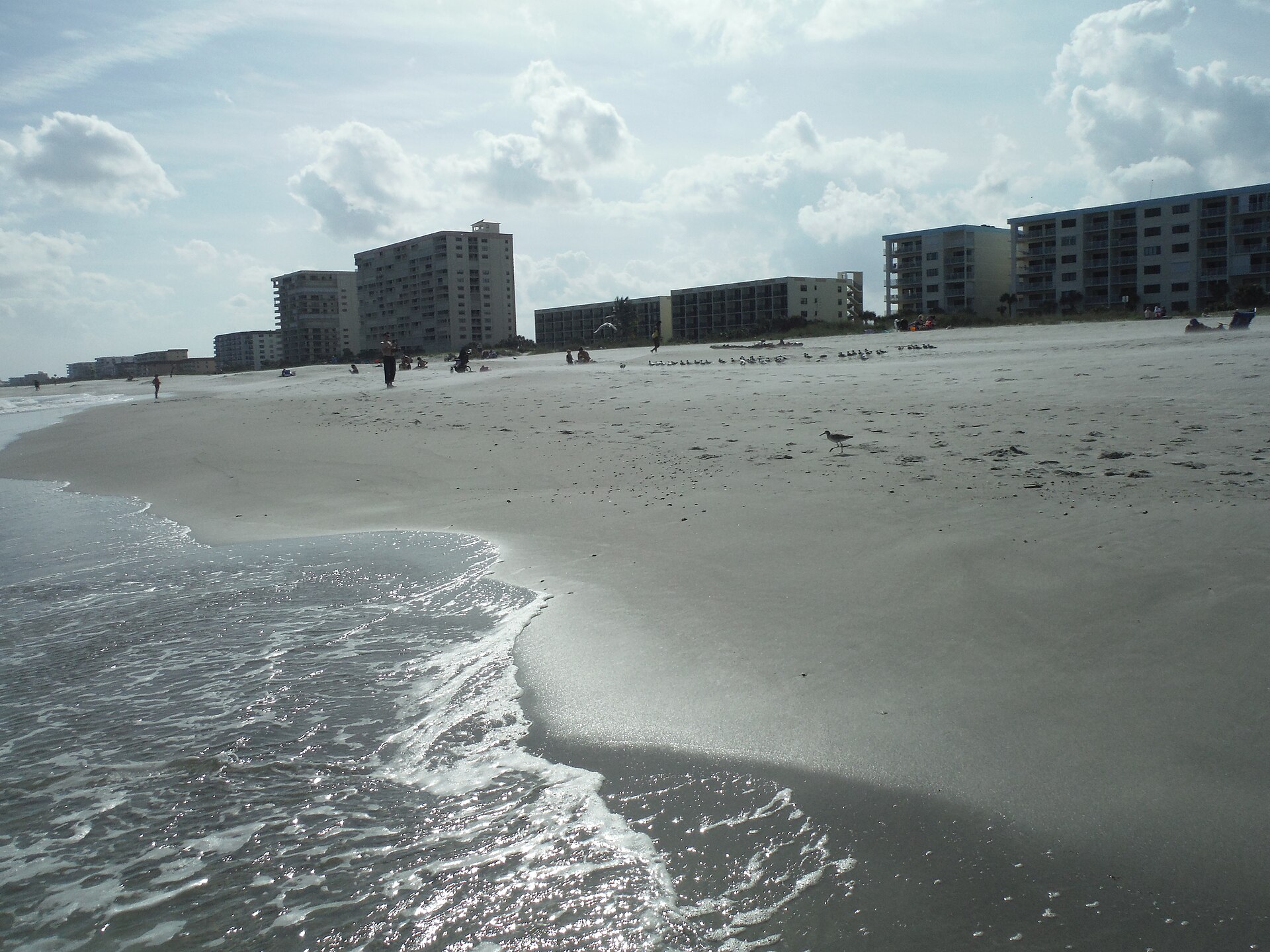
The evacuation order for Cocoa Beach was lifted progressively starting September 12, 2017, with first-responder access to the barrier strip permitted that morning and general resident return permitted in stages thereafter. The full lifting of the order, for all properties, came over the following several days.
The return was logistically difficult. The same gasoline shortages that had affected the departure now affected the return. Power was not restored to most Cocoa Beach properties for several days; some areas remained without power for over a week. Cellular service was limited. Some Cocoa Beach businesses didn’t reopen for two to three weeks; some never reopened.
The Brevard County economic impact estimate for the Irma evacuation and storm combined ran into the hundreds of millions of dollars, including:
- Lost business revenue during the closure period
- Federal emergency assistance and public-works recovery costs
- Private insurance claims for property damage
- Direct evacuation costs (gasoline, lodging, food, etc.) borne by residents
The full FEMA disaster-declaration costs for Florida from Irma were in the multi-billion-dollar range. Brevard’s share was several hundred million.
What Irma taught Brevard
The post-Irma after-action reports from Brevard County and from the Florida Division of Emergency Management identified multiple lessons:
- Fuel-supply pre-positioning for the next evacuation cycle, with state-coordinated emergency fuel deliveries to coastal staging areas before evacuation orders are issued
- Improved contraflow planning on I-95 and the Florida Turnpike for future major-hurricane evacuations
- Better coordination with private-sector hotel chains on emergency-rate lodging and capacity allocation
- Updated evacuation-zone maps integrating better storm-surge modeling
- Stronger hardening requirements for the Cocoa Beach Pier and other vulnerable barrier-island structures
Some of these have been implemented in subsequent storm cycles (Ian and Nicole in 2022, in particular, had better fuel-supply pre-positioning). Others remain ongoing policy work.
The fundamental challenge, that the Cocoa Beach barrier strip is structurally vulnerable to hurricanes, and that evacuating tens of thousands of residents and visitors requires substantial advance time and logistical support, remains unchanged. Irma was bigger than the Brevard evacuation system was sized for, and the system has been incrementally improved since. The next Category 4 or Category 5 storm with a direct Brevard track will test the upgrades.
Further Reading
Sources
- NOAA National Hurricane Center, Tropical Cyclone Report: Hurricane Irma (AL112017), nhc.noaa.gov/data/tcr/AL112017_Irma.pdf
- Florida Division of Emergency Management, Irma after-action documentation, floridadisaster.org
- Brevard County Office of Emergency Management, county-level Irma after-action report
- Florida Today archives, September and October 2017 (Brevard County Library)
- Federal Emergency Management Agency, FEMA-DR-4337-FL (Florida Hurricane Irma disaster declaration)
As an Amazon Associate we earn from qualifying purchases.