The Astronaut Memorial Foundation, founded after Challenger
The Astronaut Memorial Foundation was founded in 1986 after the Challenger disaster. The Space Mirror Memorial at Kennedy Space Center is its single most visible work. A history of the foundation and the memorial.
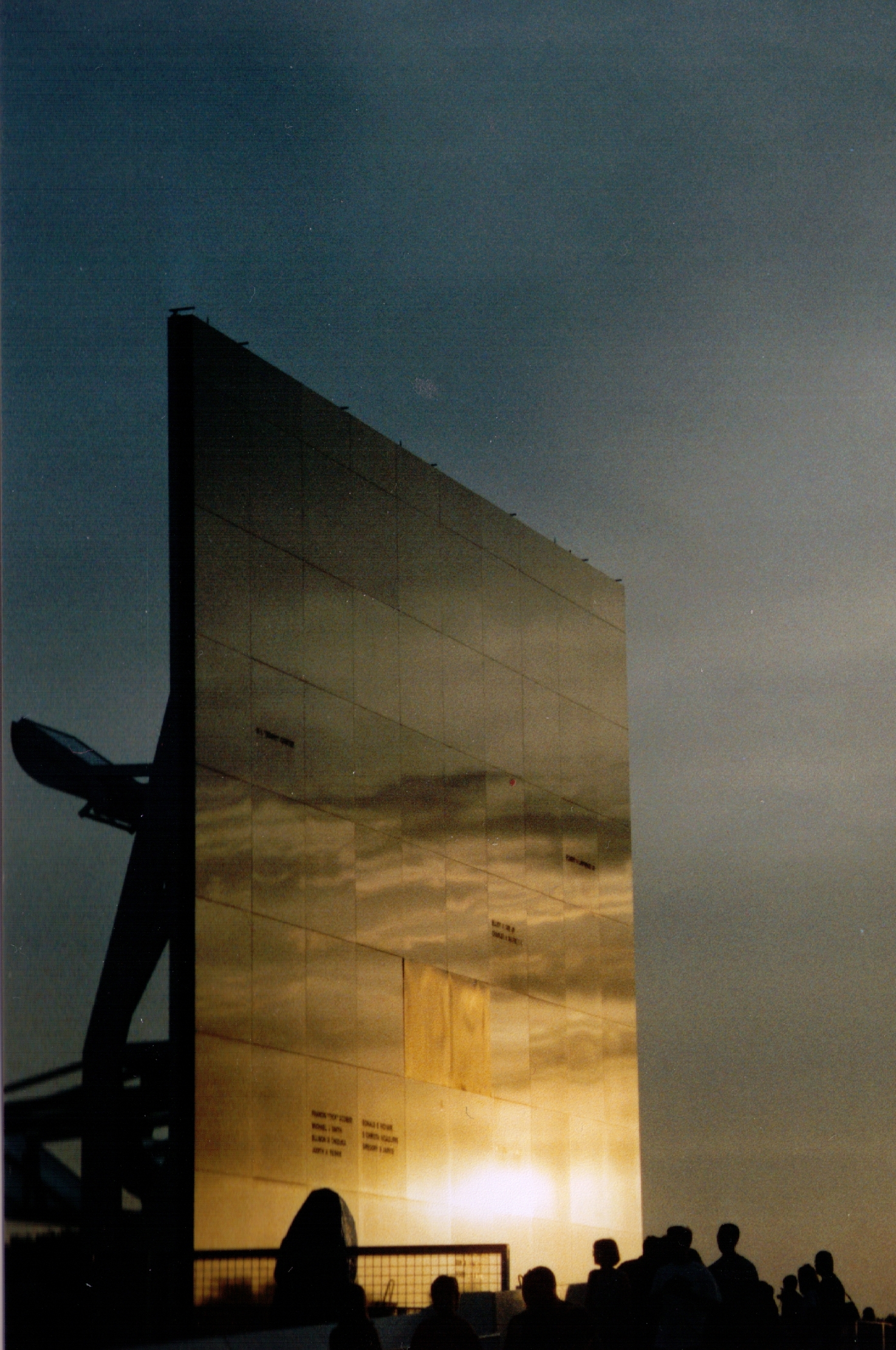
The Astronaut Memorial Foundation (AMF) was founded in 1986 in the immediate aftermath of the Challenger disaster of January 28, 1986, which killed seven NASA astronauts in a launch accident watched live by a national television audience. The foundation’s purpose, set out in its 1986 charter, was to construct and maintain a permanent memorial to American astronauts who died in service of the space program, and to support educational programming that honored their work.
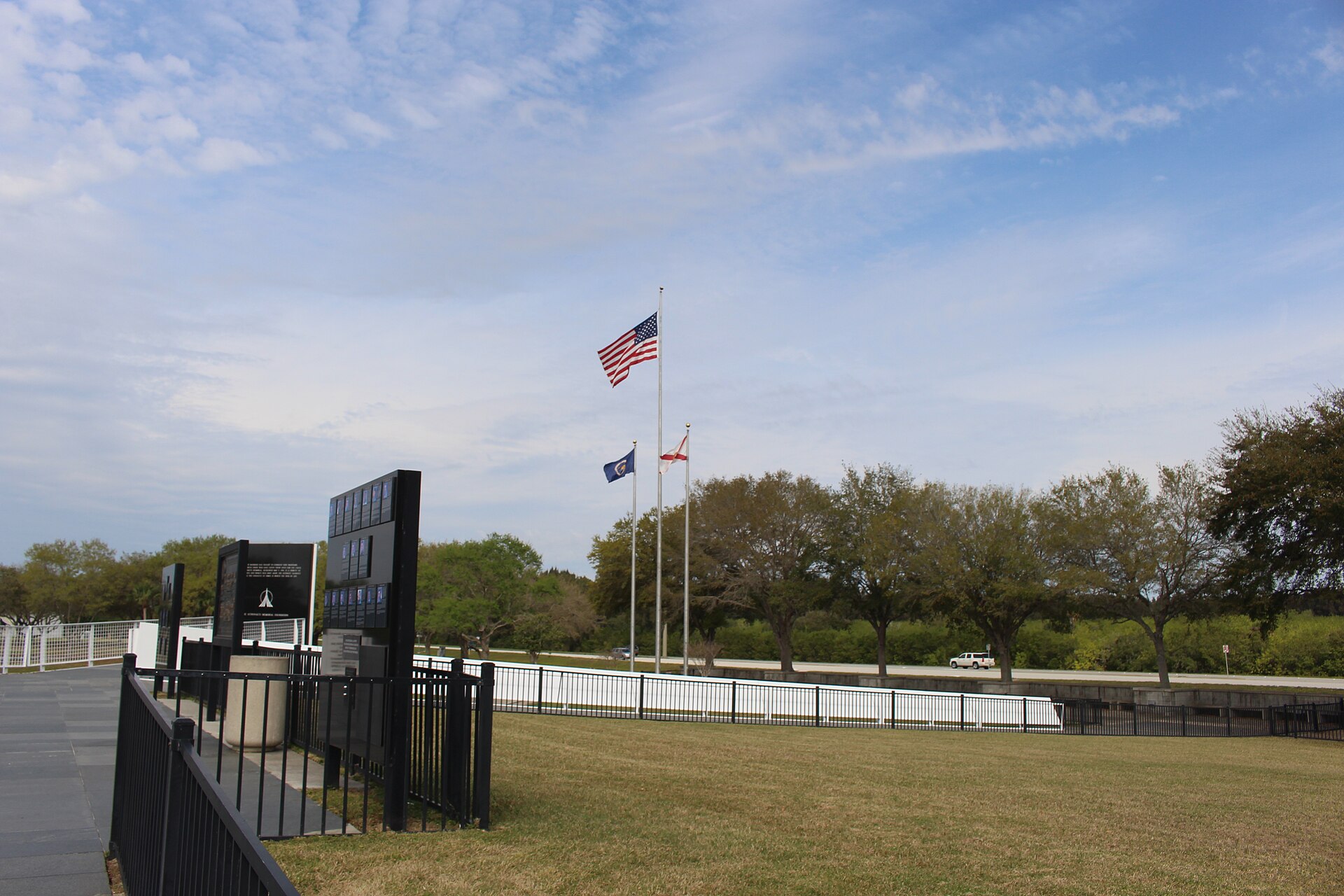
The foundation’s signature achievement is the Space Mirror Memorial, a 70-foot-tall polished black granite memorial at the Kennedy Space Center Visitor Complex, dedicated on May 9, 1991. The mirror reflects the Florida sky; the names of fallen astronauts are engraved through the granite, illuminated by lights behind the mirror so that the names appear to float against the sky.
This piece is the documentary history of the foundation and the memorial.
The founding
Challenger exploded 73 seconds after launch on January 28, 1986. The crew, who all died: Francis “Dick” Scobee, Michael J. Smith, Judith Resnik, Ellison Onizuka, Ronald McNair, Gregory Jarvis, and Christa McAuliffe (the schoolteacher selected for the “Teacher in Space” program). The accident was, at the time, the deadliest single space-program incident in American history. It triggered a 32-month grounding of the Shuttle fleet (return-to-flight came in September 1988), a presidential commission (the Rogers Commission), and a fundamental rethinking of NASA’s risk management.
It also triggered, almost immediately, calls for a permanent memorial. Within months, a coalition of NASA officials, Florida business leaders, the astronaut community, and the McAuliffe and other crew families had formed the Astronaut Memorial Foundation as a 501(c)(3) nonprofit headquartered in Brevard County. The foundation’s initial board included senior figures from the aerospace community and from Brevard County civic life.
Funding for the foundation came from a combination of private contributions, corporate giving (aerospace contractors, Florida businesses), and a state-authorized commemorative license plate program. Florida law permitted (and continues to permit) the issuance of specialty license plates whose proceeds support designated nonprofits. The “Challenger” license plate, later renamed the “Space Shuttle” plate and eventually broadened, has generated millions of dollars in cumulative revenue for AMF.
The Space Mirror Memorial
The memorial design was the result of a 1987 to 1988 international architectural competition. The winning entry, by the New York firm Holt Hinshaw Pfau Jones, proposed a vertical granite slab oriented to reflect the sky, with cut-through names illuminated from behind. The design was selected from over 700 submissions.
Construction occurred at Kennedy Space Center, with the foundation funding the project and NASA providing the site (the visitor complex grounds). The granite was sourced and worked in pieces, assembled on site, and dedicated on May 9, 1991. President George H. W. Bush attended the dedication.
The memorial originally listed the names of:
- The Apollo 1 crew (Gus Grissom, Edward White, Roger Chaffee), who died in the launch-pad fire of January 27, 1967
- The Challenger crew of January 28, 1986
- Various other American astronauts killed in training accidents, aircraft accidents during their NASA careers, and other space-program-related deaths
The Space Mirror Memorial is dynamic in the sense that names are added when additional astronauts die in service of the program. Most significantly, the names of the Columbia crew were added after the February 1, 2003 Columbia accident:
- Rick Husband
- William McCool
- Michael Anderson
- David Brown
- Kalpana Chawla
- Laurel Clark
- Ilan Ramon (Israeli payload specialist)
Subsequent additions have included astronauts and astronaut-candidates who died in training, aircraft accidents, and other non-launch events.
The memorial’s design features the names cut entirely through the granite, so that the names appear as transparent letterforms against the reflected sky. Light from behind the mirror, integrated into the design, illuminates the names from within. The visual effect, names floating in sky-reflection, is the memorial’s deliberate emotional center.
The foundation’s broader work
Beyond the memorial, the Astronaut Memorial Foundation supports educational programming aimed at K-12 and college-age students, with emphasis on STEM education and on the legacy of the fallen astronauts. The foundation’s programs include:
- Educational scholarship programs for students pursuing aerospace and STEM degrees
- Curriculum support for teachers using space exploration as an educational theme
- Public outreach programs at the Kennedy Space Center visitor complex
- Anniversary commemorations for Apollo 1, Challenger, and Columbia, with annual events at the memorial
The foundation maintains a small permanent staff in Brevard County and operates partly through volunteer support from the astronaut community and from local civic organizations.
The license-plate revenue continues to be a substantial funding stream. The cumulative dollar contribution from the Florida specialty plate program runs into multiple millions of dollars across the foundation’s life.
The memorial’s place in Cocoa Beach culture
The Space Mirror Memorial sits at Kennedy Space Center, technically about 15 miles north of incorporated Cocoa Beach, on Cape Canaveral. But it functions as a community institution for the entire barrier-island civic culture. Cocoa Beach residents visit. Cocoa Beach schools (including Cocoa Beach Junior-Senior High School) bring students for educational visits. Cocoa Beach veterans and military families attend the anniversary commemorations.
The Challenger date (January 28) and the Columbia date (February 1) are observed each year. Apollo 1 (January 27) is included in the same commemoration cycle. The proximity of the three anniversaries, late January and early February, has made that period the consolidated memorial season for the American space program’s losses.
Cocoa Beach as a community has, since 1986, been one of the principal civic anchors for the foundation’s public profile. The McAuliffe family, the Scobee family, and other Challenger families have visited Cocoa Beach multiple times for commemorations. The foundation’s annual events draw substantial Brevard attendance.
The memorial is open to the public during Kennedy Space Center Visitor Complex hours, with admission included in the standard visitor-complex ticket. It is, by visitor counts, one of the most-visited memorials in Florida, with hundreds of thousands of viewings per year over its 35-year operational history.
What the memorial honors
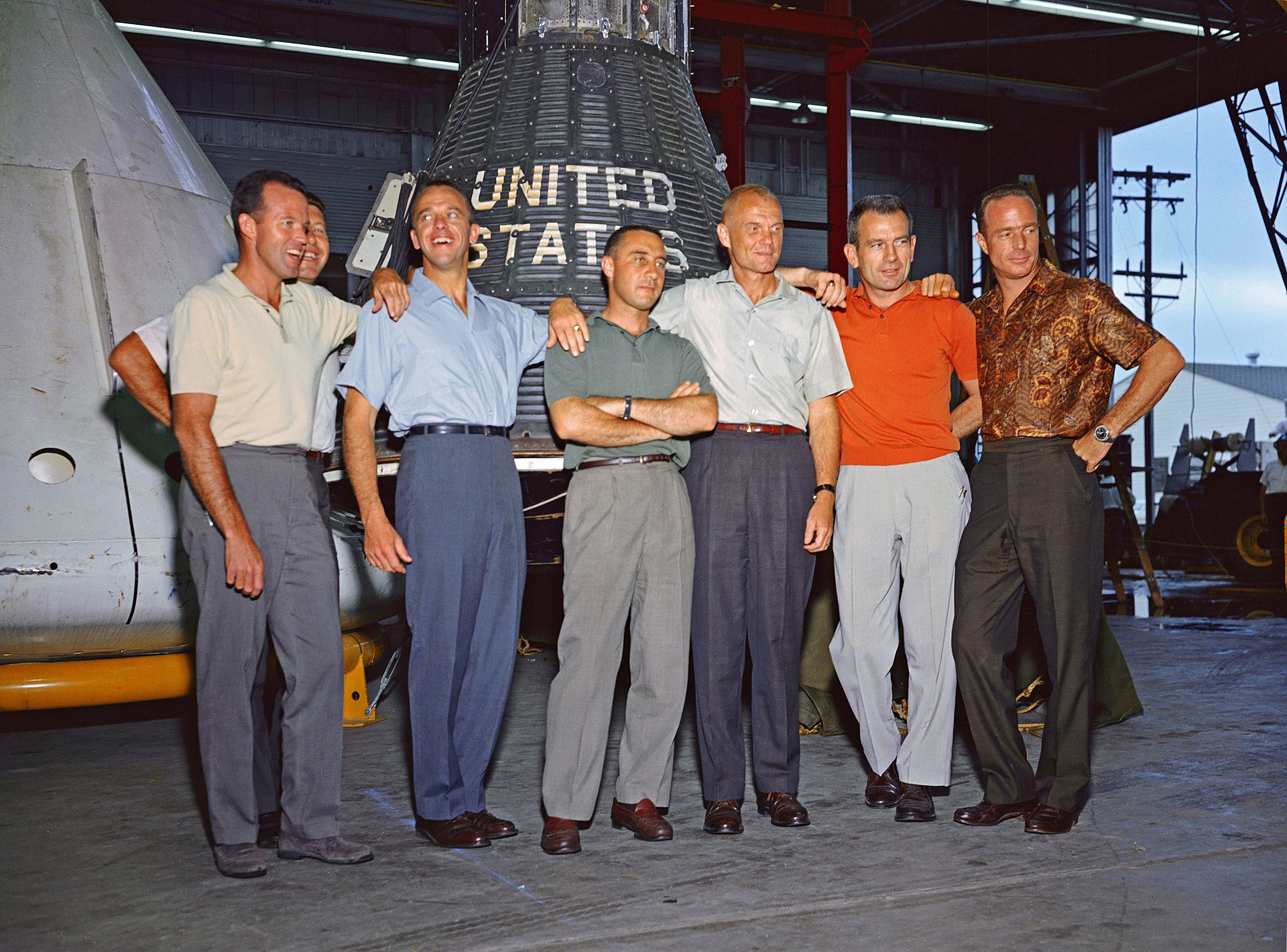
The Space Mirror Memorial commemorates American astronauts and cosmonauts (the Columbia crew included Israeli payload specialist Ramon, hence the international scope) who died in service of the space program. The honorees are:
- Apollo 1 (January 27, 1967): Grissom, White, Chaffee
- X-15 flight 191 (November 15, 1967): Michael J. Adams
- T-38 training crashes: Theodore Freeman, Charles A. Bassett, Elliot See, Clifton Williams, Robert Lawrence, plus others
- Challenger (January 28, 1986): Scobee, Smith, Resnik, Onizuka, McNair, Jarvis, McAuliffe
- Columbia (February 1, 2003): Husband, McCool, Anderson, Brown, Chawla, Clark, Ramon
- Various other deaths during NASA careers in aircraft accidents and other circumstances
The full names list, with brief biographical notes for each honoree, is maintained on the Astronaut Memorial Foundation’s website and on plaques near the memorial itself.
The memorial does not include cosmonauts of the Soviet/Russian program who died in their parallel space program. The boundary is “American astronauts and crew of American missions,” which includes payload specialists like Ramon who flew on NASA-led missions, but not Soviet/Russian or Chinese cosmonauts who flew separately.
What the foundation has built
The Astronaut Memorial Foundation, established in the most painful moment of NASA’s modern history, has built a permanent piece of the space-program infrastructure. The memorial will outlast every individual who worked on Apollo, every contractor who watched Challenger, every Florida resident who saw the smoke trail across the morning sky on January 28, 1986. The granite is engineered to last centuries. The names will remain visible against the Florida sky for as long as the Visitor Complex stands.
Behind the foundation is a simple proposition: that the people who died deserve to be remembered, by name, in a place where the work they were doing is still happening. The Saturn V is two miles north. The Shuttle Atlantis is on display 500 yards west. The Vehicle Assembly Building, where the rockets that killed Apollo 1 and Challenger were assembled, looms above the visitor complex. The names look back at all of it.
That’s a memorial that does its work.
Further Reading
- The Right Stuff by Tom Wolfe
- Failure Is Not an Option by Gene Kranz
- Live from Cape Canaveral: Covering the Space Race by Jay Barbree
Sources
- Astronaut Memorial Foundation, amfcse.org
- NASA Kennedy Space Center, nasa.gov/centers/kennedy/home
- Rogers Commission Report (1986), official Challenger investigation
- Columbia Accident Investigation Board Report (2003)
- Florida specialty license plate program records, Florida Department of Highway Safety and Motor Vehicles
As an Amazon Associate we earn from qualifying purchases.