How Cocoa Beach became the East Coast surf capital
The Eastern Surfing Association, Dick Catri, the 1960s Brevard surf scene, Kelly Slater, and the documentary case for why Cocoa Beach holds the East Coast surfing title.
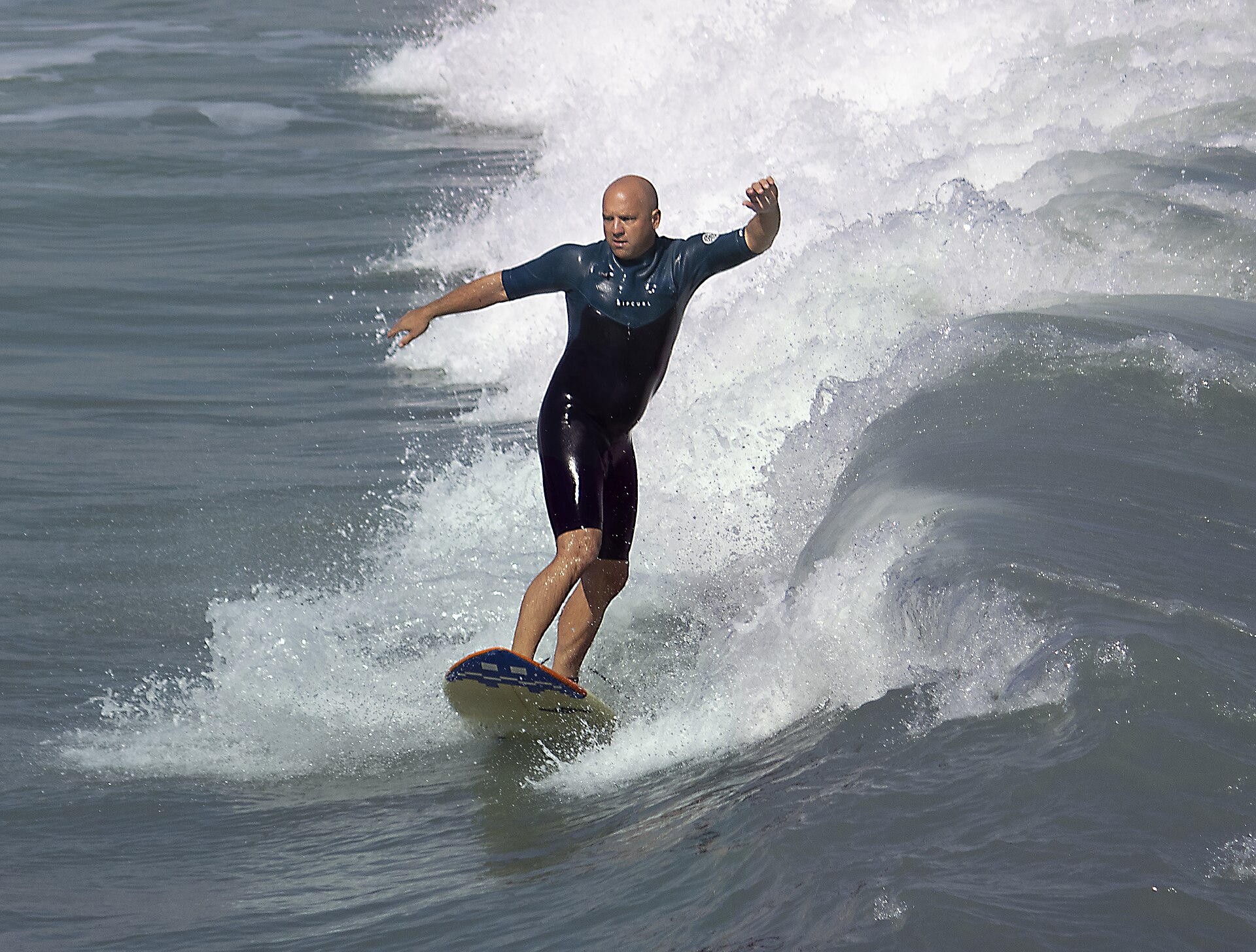
Cocoa Beach’s claim to be the East Coast surf capital rests on three pieces of documentary evidence and one unanswerable comparison. The documentary pieces: the Eastern Surfing Association headquarters is in Brevard County, Ron Jon Surf Shop has operated its flagship in Cocoa Beach since 1963, and Kelly Slater, by every objective measure the most successful competitive surfer in history, grew up here and learned to surf here. The unanswerable comparison: whether any other East Coast town has a stronger case. New Smyrna Beach, Florida, has the wave quality but not the institutional history. The Outer Banks of North Carolina have the wave variety but not the population density or the contest infrastructure. New Jersey has the cultural lineage (Ron Jon’s origin) but worse year-round surf.
Cocoa Beach has all the pieces. This is how they came together.
The geography of Cocoa Beach surf
The barrier-island geometry of Cocoa Beach produces consistent, year-round, surfable swell at modest sizes. The beach faces roughly east-southeast, the offshore bathymetry is gradual, the prevailing wind regime aligns acceptably with the swell direction, and tropical-storm activity from June through November supplies the larger summer-fall swells. Winter brings cold-front swells from the northeast.
The waves aren’t world-class. Pacific surfers visiting Cocoa Beach for the first time usually describe the surf as “small but consistent”, head-high on a good day, waist-high on most. The break is forgiving (sandy bottom, no reef), the water is warm most of the year (averaging 68°F to 84°F), and the surf-able days per year are high. For learning surfers and competition organizers, this combination is ideal: you can hold a contest most weekends of the year and reasonably expect waves.
That accessibility, the ability to practice consistently, year-round, without dealing with cold water or dangerous breaks, produced the surfer talent pool that eventually delivered Kelly Slater.
The institutional history
The Eastern Surfing Association (ESA) was founded in 1967. Its headquarters has been in or near Cocoa Beach for most of the organization’s history; the current ESA address is on Florida’s East Central coast. The ESA is the largest amateur surfing organization in the world by membership, with roughly 4,000 active members across a dozen East Coast districts (Maine through Florida).
Founded by Cecil Lear and the early East Coast competition organizers, the ESA codified East Coast amateur surfing: a competitive ladder from local meets through regional finals to a national championship. The competition format that emerged shaped a generation of East Coast surfers, including Slater. The ESA Easterns, held annually in Cape Hatteras since 1968 with occasional venue rotations, is the longest-running surfing championship on the East Coast.
The ESA’s choice of Brevard County for its institutional center wasn’t accidental. The combination of consistent surf, established surf retail (Ron Jon by 1963, Dick Catri’s various operations through the 1960s and 1970s, a half-dozen smaller shops by 1970), and proximity to the growing Cape Canaveral tourist economy made Cocoa Beach the practical hub.
Dick Catri
The single most important non-Slater figure in Brevard surfing history is Dick Catri (born 1937, died July 2014). Catri grew up on Long Island, started surfing in New York in the 1950s, moved to Florida in the early 1960s, and spent the next five decades as a surfer, shaper, retailer, contest organizer, and promoter centered on Cocoa Beach.
Catri ran multiple surf shops in Cocoa Beach over the years. He organized contests. He sponsored young surfers. He shaped boards. He coached the early Slater, who was a member of the Hobie surf team Catri managed in the mid-1980s, when Slater was a teenager. Catri’s role in identifying Slater’s talent, securing the sponsorship that funded Slater’s amateur career, and connecting him to the larger surf-industry network is documented in multiple surfing-history sources, including the Surfing Heritage Center and Slater’s own interviews.
Catri died in 2014. The 2024 Surfing Hall of Fame inducted him posthumously. Cocoa Beach surfers older than fifty universally call him “the godfather” of the local scene.
Kelly Slater, the validation
Kelly Slater was born February 11, 1972, in Cocoa Beach. He learned to surf as a kid on the Cocoa Beach barrier strip, competed in ESA amateur events through his teens, turned professional in 1990 at age 18, won his first ASP World Tour event in 1992, and won his first World Championship in 1992 at age 20, the youngest world champion in history at that point.
Slater went on to win eleven World Championships, the most in surfing history, and remained competitive on the professional tour into his fifties. (For the full biography, see “Kelly Slater: born 1972, grew up in Cocoa Beach, eleven world titles”.)
Slater’s dominance is the single biggest piece of evidence for Cocoa Beach’s East Coast surfing claim. No other East Coast surfing town has produced a top-tier world champion at his level. The technical thesis is straightforward: Slater learned to surf in small, forgiving waves, which forced him to develop a technical, maneuver-heavy style that translated brilliantly to the larger, faster waves of the Pacific tour. The big-wave Hawaiians who dominated the 1970s and 1980s tour had been raised on power surfing; Slater brought speed-and-finesse, and the judging criteria evolved in his direction.
You can argue that any talented kid from any beach town could have done what Slater did with sufficient practice. The data says only one such kid did, and he grew up on Cocoa Beach.
Other Cocoa Beach surfers of note
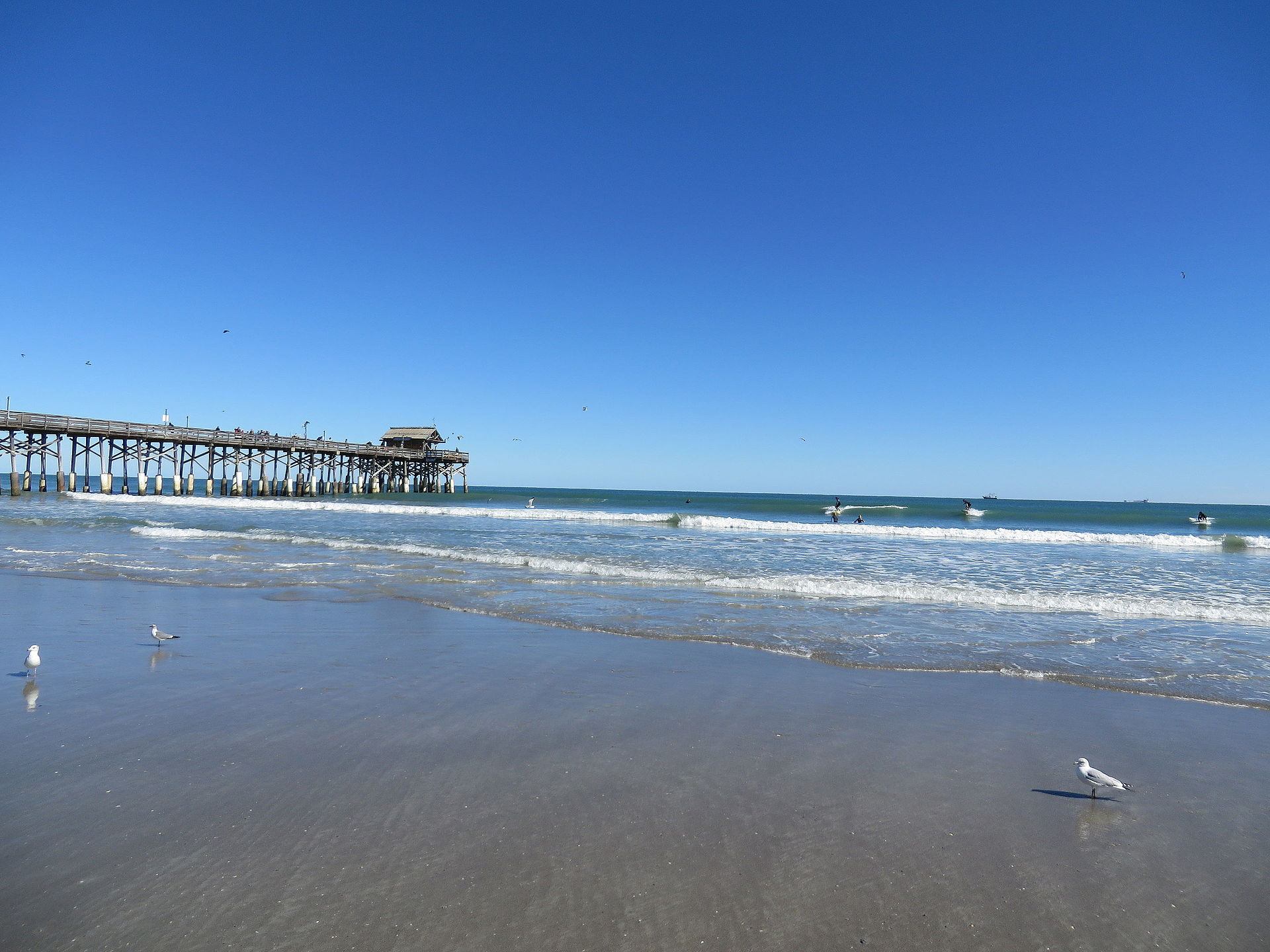
Slater is the headliner, but Cocoa Beach has produced a long roster of professional and high-level amateur surfers:
- Mike Tabeling (1947–2002), early East Coast tour pro, ESA hall of fame
- Mike Notary, ESA Easterns champion
- Sean Slater, Stephen Slater, Kelly’s older and younger brothers, both serious surfers in their own right
- CJ Hobgood (born 1979), Melbourne, Florida; 2001 World Champion
- Damien Hobgood, Melbourne, Florida; long-running tour pro
The Hobgoods are technically from Melbourne (about 25 miles south of Cocoa Beach), not Cocoa Beach proper, but they came up through the same Brevard County / ESA pipeline as Slater. The regional surf scene that produced the Slater era produced multiple top-tier professional surfers, not just one.
The 2026 status
Cocoa Beach in 2026 hosts dozens of amateur and youth surf events a year. The Cocoa Beach Easter Surf Festival, the Ron Jon Easter Surf Festival (the largest amateur surf contest in the world by entry count), and various ESA regional events all run on the barrier strip. The local surf-education infrastructure, surf schools, board rental, lifeguards trained in surf safety, is the densest on the East Coast.
The professional tour doesn’t stop in Cocoa Beach. Wave quality is the limiter: the World Surf League’s Championship Tour stops at Pipeline, Bells Beach, Teahupo’o, and other heavy-water spots that Cocoa Beach can’t compete with on size. But the amateur and developmental tour stops here often, the ESA Easterns rotates here regularly, and the talent pipeline still produces high-level surfers.
The case for Cocoa Beach as East Coast surf capital is not the size of the waves. It’s the depth of the infrastructure, the longevity of the competitive history, the fact that the most decorated surfer in the world grew up on the local sand, and the institutional anchor of the ESA. By those measures the title is defensible. By measures of pure wave quality it is not. Both can be true, and locals understand that the answer to “what’s the best wave in Cocoa Beach today” is usually “go to New Smyrna or come back at sunrise.”
Sources
- Eastern Surfing Association, surfesa.org
- World Surf League, Kelly Slater profile, worldsurfleague.com/athletes/15/kelly-slater
- Surfing Heritage and Culture Center, surfingheritage.org
- Surfing Hall of Fame, Dick Catri induction (2024)
- Florida Today obituary for Dick Catri (July 2014)
- Surfer Magazine and Surfing Magazine archives, East Coast features (1970s–2010s)
Further Reading
As an Amazon Associate we earn from qualifying purchases.