Lori Wilson Park and the last barrier-island maritime hammock
A 32-acre Brevard County park on the Cocoa Beach Atlantic side preserves one of the last intact maritime hammocks on the barrier island. Trails, ecology, and how to actually use the park as a local.
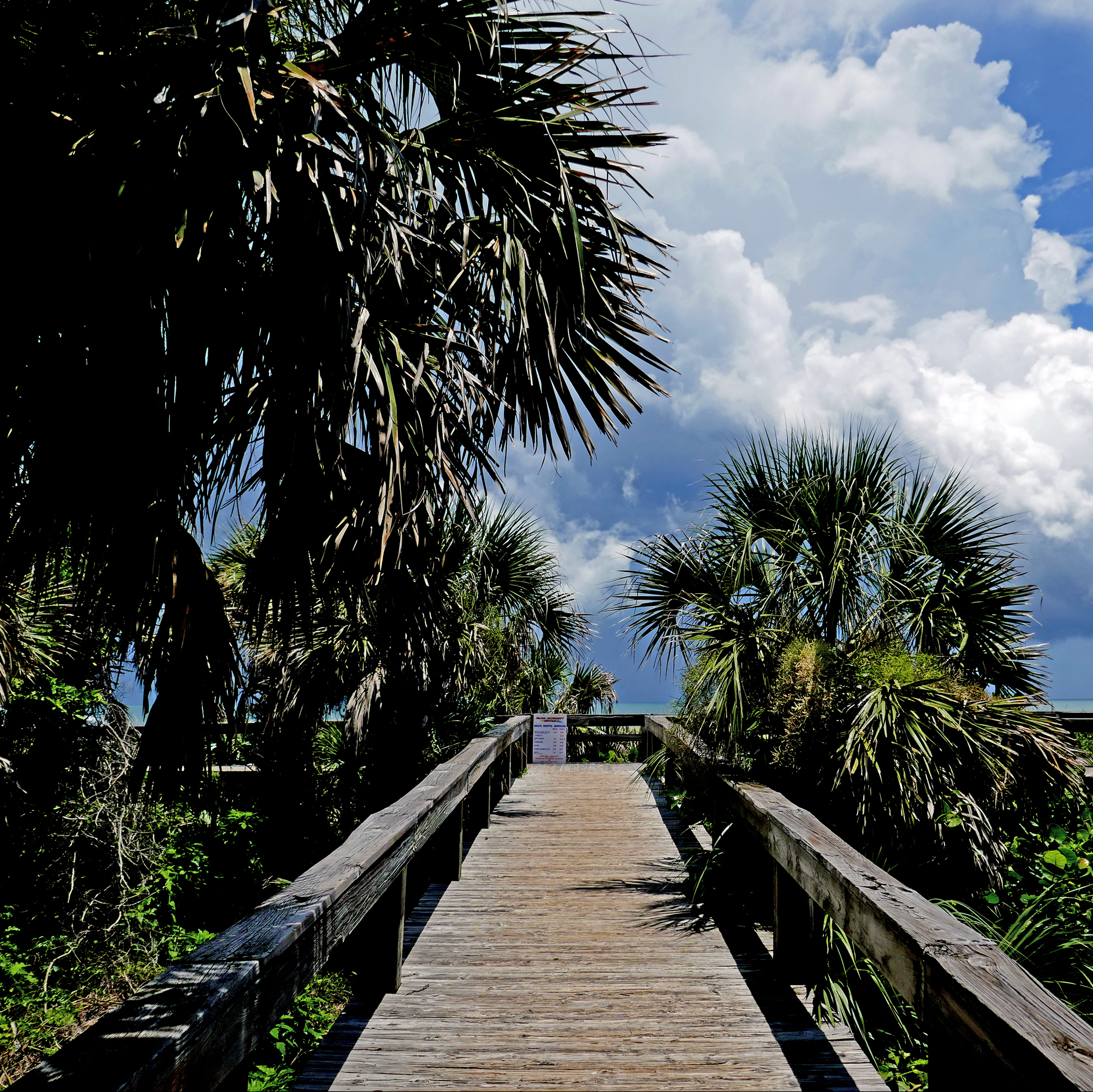
Lori Wilson Park is a 32-acre Brevard County park on the Atlantic side of Cocoa Beach, off State Road A1A about a mile north of the Cocoa Beach Pier. It contains roughly 1,500 feet of unobstructed Atlantic beachfront, the largest free public-parking lot on the Cocoa Beach barrier strip (more than 200 spaces), restrooms and showers, picnic shelters, the Cocoa Beach Park Pavilion event venue, and, uniquely on the barrier island, a substantial intact maritime hammock ecosystem on its western half. The hammock is, structurally and ecologically, what most of the barrier strip looked like in 1900 before development cleared it. It is the closest thing Cocoa Beach has to a wild area.
The park is named for Lori Wilson, a Brevard County state senator (Florida Senate, 1972 to 1978, representing District 16) who championed coastal-park preservation during her tenure. The park was dedicated in her name following her advocacy.
What’s actually there
The 32-acre footprint breaks down roughly:
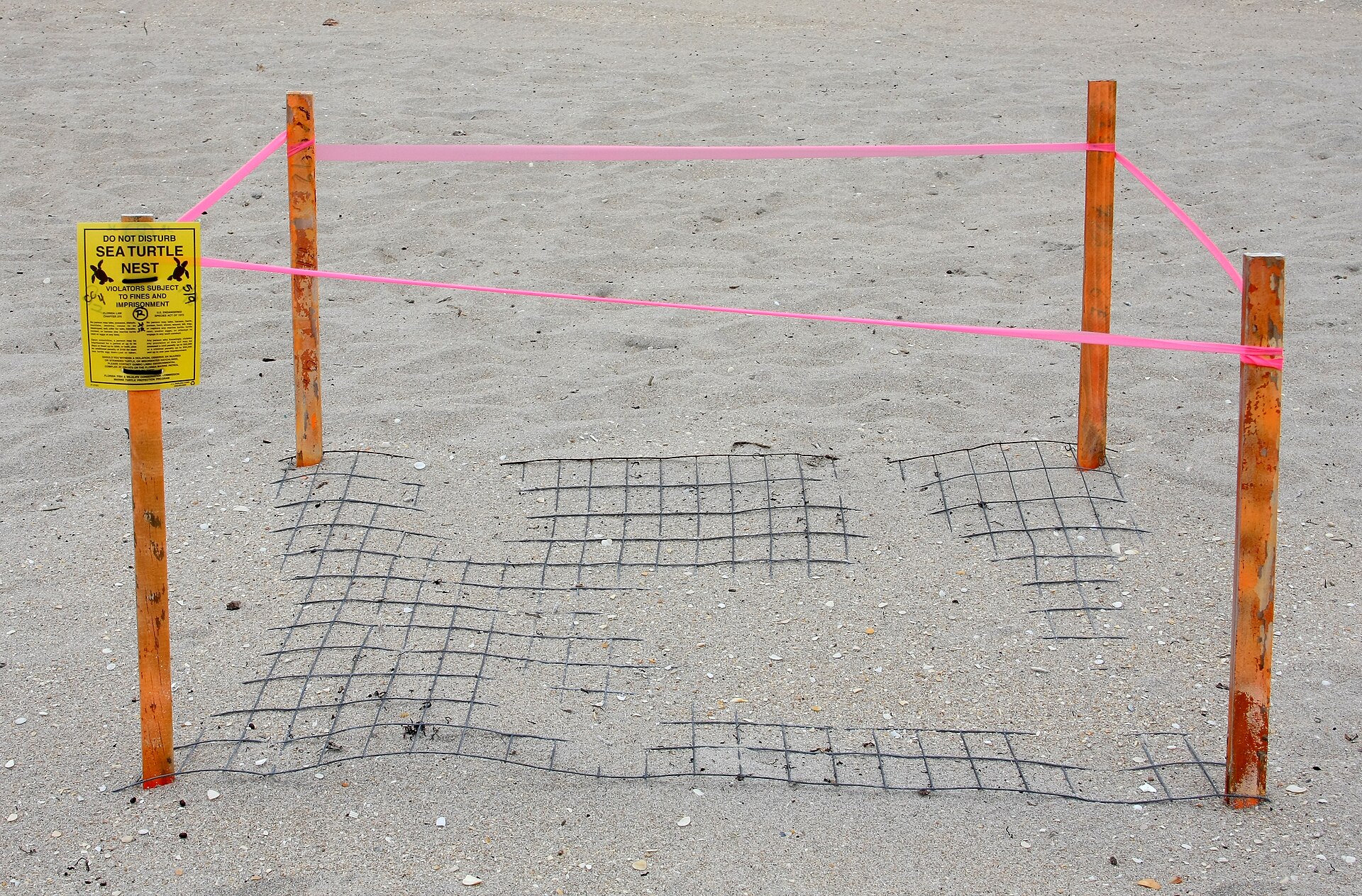
Eastern third: beach and dune. A wide stretch of Atlantic beach with intact dune line. Sea oats (Uniola paniculata) bind the dunes; sea grape (Coccoloba uvifera) and railroad vine (Ipomoea pes-caprae) cover the back-dune. Beach access is via two wooden walkovers; the dune line itself is fenced and signed to prevent foot traffic. Lori Wilson Park beach is one of the better-monitored sea-turtle-nesting beaches in Cocoa Beach proper. (See “Sea turtle nesting and the dark-beach rules” for the turtle program.)
Middle third: parking, facilities, and event spaces. The parking lots, restrooms, showers, picnic shelters, playground, and the Cocoa Beach Park Pavilion. The pavilion hosts community events, occasional weddings, and city programs. The parking is free and unmetered, which makes Lori Wilson the most popular beach access for non-resident Cocoa Beach visitors.
Western third: the maritime hammock. The actual ecological-value portion of the park. A maritime hammock is the climax forest community of Atlantic barrier islands, a mix of evergreen broadleaf trees, salt-tolerant shrubs, and palms, growing on sandy soil with a closed canopy that filters out salt spray. Cocoa Beach’s maritime hammock was almost entirely cleared during the 1925–1970 development sequence. The Lori Wilson Park hammock is the largest remaining contiguous fragment within incorporated Cocoa Beach.
What’s in the hammock
Botanical inventory of the Lori Wilson Park hammock (per Brevard County Parks documentation and casual surveys):
- Live oak (Quercus virginiana), dominant canopy tree
- Cabbage palm (Sabal palmetto), Florida state tree, common throughout
- Saw palmetto (Serenoa repens), understory shrub
- Wild coffee (Psychotria nervosa), understory shrub
- Beautyberry (Callicarpa americana), understory shrub, conspicuous purple berries in fall
- Sea grape (Coccoloba uvifera), at the hammock-dune transition
- Florida privet (Forestiera segregata), small tree
- Yellow jessamine (Gelsemium sempervirens), vine
The hammock supports a bird population that includes pileated woodpeckers, gray catbirds, mockingbirds, and a roster of warblers during fall migration. The hammock also hosts the standard Florida barrier-island reptile fauna, anoles, brown anoles, occasional black racers, and some gopher tortoise (Gopherus polyphemus) sign in less-trafficked areas, though gopher tortoise populations in Cocoa Beach proper are sparse.
A short looped trail through the hammock starts from the parking lot. The trail is less than half a mile long, walkable in any conditions, and informative signage describes the key plant species. It’s the closest you can get to “wild” inside Cocoa Beach.
Why this matters ecologically
A maritime hammock is what Cocoa Beach’s interior looked like before development. The original 1923 Edwards plat overlaid a hammock-and-dune landscape; lot sales and construction over the following century cleared almost all of it. The Lori Wilson Park hammock is one of only a handful of intact patches remaining anywhere on the Brevard barrier strip, Patrick Space Force Base preserves another major fragment to the south, and a few isolated parcels in Cape Canaveral and the northern barrier strip retain remnants.
From a conservation standpoint, intact maritime hammock provides:
- Migratory bird habitat during fall and spring passerine migration along the Atlantic flyway
- Salt-spray buffer for the interior of the island
- Native seed source for any future barrier-island restoration work
- Educational and research access to the pre-development ecosystem
The hammock fragment in Lori Wilson Park is small enough that its ecological function is mostly local, it can’t, for instance, sustain a viable population of large mammals or birds requiring miles of territory. But for the species that can use small patches (most resident songbirds, most understory plants, most insect communities), it’s a working ecosystem.
Using the park as a local
Cocoa Beach residents in 2026 use Lori Wilson Park primarily for:
Free beach parking. The lot is large, free, and rarely full except on major holiday weekends. Most other Cocoa Beach beach accesses charge for parking or have very small lots. Lori Wilson is the strategic choice for anyone who lives further than walking distance from the beach.
Dog access. A portion of the park (check current signage) permits leashed dogs in the hammock and on the marked walkovers. Dogs are generally not permitted on the Cocoa Beach beach itself; Lori Wilson’s specific rules have been more permissive at various times.
Quick hammock walks. The interior trail is short enough to do in twenty minutes. Birding is best at dawn and dusk during spring and fall migration.
Event space rentals. The pavilion is available for weddings, reunions, and corporate events through Brevard County Parks. Rental fees are posted and vary by event type.
Sunrise viewing. The Atlantic beach faces east, the elevation is high enough that you get a clean horizon, and the wide beach gives a long unobstructed view. Sunrise photographers cluster here.
The park’s future
Lori Wilson Park is owned by Brevard County, maintained by Brevard County Parks and Recreation, and not currently slated for any major redevelopment. Periodic capital improvements (parking lot resurfacing, restroom upgrades, walkover replacements after hurricane damage) are scheduled through the regular county budget cycle.
The hammock is protected from development by the park’s public ownership and by Florida coastal-management regulations that limit alteration of native maritime ecosystems. As long as the park remains public and properly funded, the hammock should persist.
That’s not guaranteed. Florida’s coastal-management resources have been stretched over the past two decades by hurricane-recovery demands; routine ecological maintenance has sometimes been deferred. The park’s current condition is generally good, but the hammock would benefit from active invasive-plant management (Brazilian pepper, Schinus terebinthifolius, is a recurring problem on Florida barrier islands and is present in patches at Lori Wilson). Local volunteer groups, partnering with county parks staff, periodically work on invasive removal.
For a barrier-island town that lost most of its natural ecosystem to its own commercial success, having 32 acres of preserved coast, beach, dune, and the last good piece of hammock, is the consolation prize. It’s better than the alternative.
Further Reading
- Florida’s Fabulous Natural Places by Tim Ohr
- The Gulf: The Making of an American Sea by Jack E. Davis
- Florida: A Short History by Michael Gannon
Sources
- Brevard County Parks and Recreation, Lori Wilson Park, brevardfl.gov/ParksRecreation
- Florida Department of Environmental Protection, coastal ecology and maritime hammock documentation, floridadep.gov
- Brevard County Property Appraiser, parcel records for the park property
- Florida Native Plant Society, regional plant lists for Brevard County
- Florida Senate, Senator Lori Wilson tenure 1972 to 1978
As an Amazon Associate we earn from qualifying purchases.